


dissident:
(plural: ‘dissidents‘)
‘to dissent’ = to have disagreement, difference of opinion, etc.; ‘dissent’ (noun) = disagreement, difference of opinion, ideas, etc.
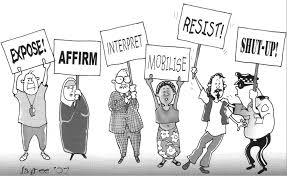
dissidents, expressing their disagreement
a person who dissents;
a person who openly and strongly expresses his disagreement with another person/a group or an opinion, policy;
a dissenter (previous entry);
a protester,
e.g.
Kaiser has been called a dissident just because he spoke against the new taxation policy of the present government.
In an authoritarian government, any dissident is treated as the enemy of the State and is punished severely.
The dissidents in the past expressed their dissent secretly for fear of being punished by the religious or political leaders.
Note: ‘Dissident’ is more commonly used as an adjective to refer to people that oppose a policy or idea, especially a political one, e.g. a dissident group; a dissident attitude; a dissident mediation; etc. For an article that shows us how we come across this word in its adjective form in our daily readings, please click here.
For an article that explains to us what an ‘Aids Dissident’ is, please click here and for an item of news that talks of a dissident, please click here. For an item of news that shows us how we encounter this word in our daily readings, please click here. For an article that shows the difference between a ‘dissident’ and a ‘dissenter’, please click here.
Compare: dissenter ← ← previous entry