


dragon:
[For the right pronunciation, please click here.]
(A)
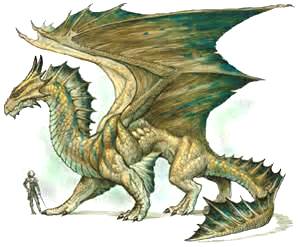
a dragon
an imaginary (mythical/folklore) large snake-like creature; with four legs and sharp powerful claws on each foot; long tail; spikes on the body and tail; covered in scales; some with wings; spit (breathe) fire or poison; flies in the air,
(i) European dragon
(ii) Asian dragons:
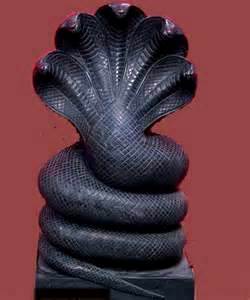
the Indian Nag/Naga
Chinese Dragon
Druk or Thunder Dragon (Bhutan)
Japanese Dragon
Korean Dragon
Naga (Indian Vedic Dragon)
Vietnamese Dragon
The ‘red dragon’ is the national animal of ‘Wales’, UK.
The ‘Chinese dragon’ (?) is the national animal of China.
The ‘dragon’ is the national animal of Portugal and Albania, countries in Europe.
__________________________
(B)
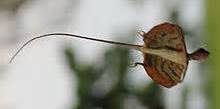
a flying dragon
a kind of animal – reptile – related to the lizards; small with bright colours; lives in trees; grows to 8-10 inches long; with a layer of web-like skin in the shape of a wing on either side of its body which helps the lizard to jump (fly/glide) from one tree to another; common in the East Indies and South Asia, also called ‘flying dragon’ or ‘flying lizard’

flaps of skin on either side
1.
dragon (noun) =
(a) a fierce violent person, especially a woman
(b) a constellation of northern hemisphere (‘constellation’ = an imaginary shape of something with the stars in the sky, in this case the shape of a ‘dragon’)
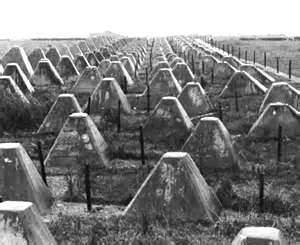
dragon’s teeth (concrete structures to stop war tanks)
2.
dragon’s teeth = strong concrete barricades set up as obstacles to war tanks in a battles
3.
dragon’s blood = a kind of powder made from the plants used in the book-printing works
4.
to sow dragon’s teeth = to start or stir up troubles, difficulties, differences, etc.
5.
to chase the dragon = to inhale (= to take into one’s lungs) heroin, an illegal drug
Note: ‘Snapdragon’, also called ‘dragon flower’, is a kind of plant! For an article that explains this flower, please click here.
More from Animals in Language
Python
python: a large python a kind of snake -- reptile -- usually large, muscular and powerful -- grows to 1 metre …
Animals-Adder-Aye-Aye
A B C D E F G H I J K L M N O P Q R S T …