


ichneumon fly
(also ‘ichneumon wasp’; plural: ‘ichneumons‘ or ‘ichneumon flies‘; pronunciation – the letters ‘ch’ rhyme with ‘k’ in “king”, and the letters ‘neu’ rhyme with the word “new”, and the letters ‘mon’ rhyme with the letters ‘mon’ in “salmon” – ‘ik-new-mon’ — for the pronunciation, please click here)
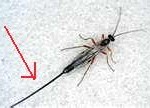
a ichneumon fly
a kind of insect – related to wasps, ants and bees – small, slender body with pale yellow/white markings on the abdomen, two long antennae, six legs, two pairs of wings, i.e. total four wings, and a thin, narrow rod-like/sting-like extension at the end of the abdomen; size: 1/8 to 5 inches long; feeds on (eats) (adults) nectar of flowers and water, (larvae) the larvae and caterpillars of other insects; about 3,000 species (kinds) found all over the world
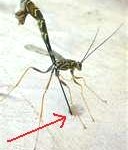
an ichneumon fly laying eggs in wood
Ichneumon flies are not ‘true flies’; they are related to wasps, bees and ants which are with with two pairs of wings.
The female ichneumon fly lays its eggs in or on the larvae of other insects that feed inside tree trunks or logs. It uses its long, thin, hollow needle-like extension at the back of its abdomen to bore into the wood (not all ichneumon fly species/kinds have this ‘needle-like extension). After boring a hole near the larva or caterpillar of another insect inside the wood, the female ichneumon fly sends an egg through the hollow of its needle where its egg hatches and feeds on the unfortunate larva or caterpillar!
The ichneumon flies do not sting, and are not harmful to people or other animals; on the contrary, they are very useful in keeping the harmful insect numbers under control by feeding on them!
More from Animals in Language
Python
python: a large python a kind of snake -- reptile -- usually large, muscular and powerful -- grows to 1 metre …
Animals-Adder-Aye-Aye
A B C D E F G H I J K L M N O P Q R S T …