

major:
(plural: ‘majors‘)
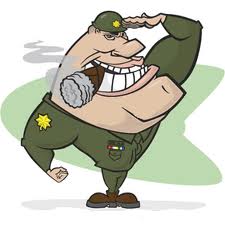
a military major
a military officer of middle rank;
(according to law and in most countries) a person who has reached the age of 18 and above (the opposite word in meaning in this context is ‘minor‘);
a student who studies and specialises in some subject,

a major (man) carrying a minor (girl)
My uncle retired from his military service as a major, and is now called ‘Major Williams or Maj. Williams’, retired.
Though the corporals and other cadres do the really fighting in a battle, the battle strategies are drawn by the majors and generals.
My niece is a linguistic major from Oxford University. (i.e. a student who did a higher level study on languages)
Only majors have the right to vote in an election; and the minors have to wait until they become majors themselves!
In some places, adolescents aged sixteen and above are considered majors and are given some rights, but in some other places, people become majors only when they reach the age of eighteen.
Most of the computer majors from our university have secured jobs in highly reputed companies. (i.e. senior students who did higher level courses in computer sciences)
Note 2: ‘Major’, always with a capital ‘M’, is often found in the names of people, e.g. John Major, Clarence Major, Philip Major, etc. For an article that explains the origin of this word as a surname/last name, please click here.
Note 3: ‘Major’, and also ‘minor’, are used in referring to music scales, e.g. ‘He played some notes in major scales.’ For an article that explains the difference between major and minor scales, please click here.
Note 4: A ‘drum major‘, on the other hand, is the one who walks before a marching military band of musicians.