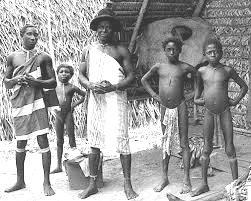
maroon:
(plural: ‘maroons‘)
(in 17th & 18th centuries) a West Indies black slave who ran away from his/her master/owner;
(in the present usage) a free man descendant from the runaway slave of the past;
a person who is left alone on a remote and deserted island on purpose or by accident,
e.g.
Robinson Crusoe, the legendary character in Daniel Defoe’s story Robinson Crusoe, had been a maroon on an island for twenty-eight years before he was finally rescued.
There are maroons still living, guarding their old African culture and customs, in several remote hilly regions on the Caribbean Islands.
The present day maroons shows us that with determination and sacrifice, people can get away and live freely from any strong bondage.
For an interesting and illustrated article about the Maroons of Suriname, please click here & please click here, for an illustrated article about a visit to a Maroon village, please click here, for a news article that shows us how this word is found in our daily news, please click here and for a blog post that describes Maroon celebrations, please click here. (For an article about the ‘Maroons’, a school, in the USA, please click here.)
Compare: castaway
Note: ‘Maroon’ is also used to refer to ‘a dark red colour with a purple tinge, e.g. ‘She wore a maroon dress to the evening party.’, for an advertisement about maroon colour wine cloth, please click here; an exploding firework used as a signal, usually as a warning signal; and ‘maroon’, as a verb, means ‘to keep somebody on a remote island and leave them there on purpose, usually as a punishment, or a person who is stranded on a remote deserted island because of an accident or a technical problem in his/her boat, or as a result of bad weather’, e.g. ‘Several tourists were marooned on a remote island as the storm grew stronger.’ In this context, the person who is marooned is called a ‘maroon’ For a news article with photos that shows us how this word is used as a verb, please click here.