


rail
[For the right pronunciation, please click here.]
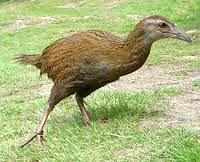
a flightless rail
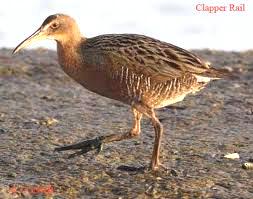
a kind of bird – ground-dwelling – wading (= walks in the shallow waters in search of food) – small to medium-sized body with different feather colours, depending on the species – small cone-shaped head with pointed beak (bill), short or long neck, short, round wings, long or short legs with long toes; size and weight: (vary very greatly) the smallest – Swinhoe’s rail – 5 inch in length and only 25 grams in weight, and the largest about 2 feet in length and about 3 Kg. in weight; some species (kinds) feed on (eat) only the plant matter, whereas other species feed on insects, worms, other small animals and the plant matter; lives for —-; found on every continent, except Antarctica
The word ‘rail’ comes from an Old English word which means ‘to screech’.
It has been witnessed that rails carry their chicks in their beaks to move them about or when danger threatens them, especially the moor-hen of the rail family! Very few bird species are known to carry their young on their backs, between their legs or in their beaks. For an article that mentions rails carrying their young, please click here & for another article about rails, along with other animals, carrying their young in their beaks, please click here.
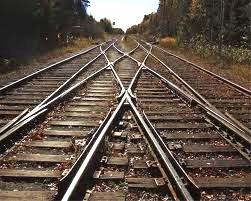
(railway line rails)

handrails
and for the long wooden or metal bars attached (tied) to the posts fixed in the ground to make a fence around a house or a running track, etc. A “railbird” is not any kind of bird, but a fan of horse-racing (or any other sport event such as car racing or even a golf tournament) who watches the race from the out ‘rails’ of the race track!
More from Animals in Language
Python
python: a large python a kind of snake -- reptile -- usually large, muscular and powerful -- grows to 1 metre …

Animals-Adder-Aye-Aye
A B C D E F G H I J K L M N O P Q R S T …