


whippoorwill
(also ‘whip-poor-will’, ‘poorwill’)
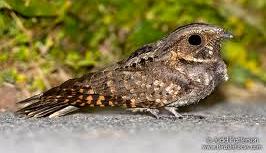
a kind of bird – song bird – nocturnal (= active at night) – belongs to the night-jars – dark brown and black feathers on the upper side and grey and black on the under side (males with a band of white feathers below the throat and white tips on the outer tail feathers and white eye-brows), large head with short pointed beak (bill), whiskers (= stiff hair-like, (bristles) around the beak), wide mouth – long, strong wings, short legs with small, weak feet, medium-sized tail; size: 9-10 inches long, and weight: 45-65 grams; feeds on insects; lives for 4-6 years (some individuals are known to live for 15 years); about 12 (?) species, found in North and Central America
This bird’s name is onomatopoeic, i.e. it is given this name after the male’s sound (call) ‘whip-poor-will’ to attract females! A naturalist is believed to have recorded 1,088 repeated calls of a whippoorwill in a row before pausing, and a young man has reported having heard a whippoorwill call for 91 minutes non-stop!!
The ‘common whippoorwill’ is the only bird known to hibernate (= go into long a sleep-like state when the seasonal weather is bad). This discovery was made on 29 December, 1946 in Southern California!
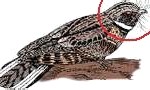
with whiskers
The whippoorwills are one of the very few bird species with ‘whiskers’, bristles round its short but wide beak. Though the purpose of these ‘whiskers’ is not yet fully studied, some bird experts suggest that the whiskers may help these birds catch insects! Other birds that have obvious whiskers are: flycatchers, swallows and other species of goatsuckers and nightjars to which this bird is related to.
Though the whippoorwills can fly and perch on trees in wait, they nest on the forest floor in the leaf litter!
It was once believed that the whippoorwills suck milk from goats’ udders, and cause the goats dry up!
More from Animals in Language
Python
python: a large python a kind of snake -- reptile -- usually large, muscular and powerful -- grows to 1 metre …
Animals-Adder-Aye-Aye
A B C D E F G H I J K L M N O P Q R S T …