


crayfish
(also ‘crawfish’, ‘crawdad’ and ‘mud bug’; pronunciation: the letter ‘c’ is said with a ‘k’ sound as in “king” — for the right pronunciation, please click here)

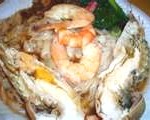
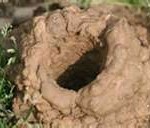
a kind of animal – fresh-water crustacean – related to and looks like a small lobster; soft body covered by jointed exoskeleton (hard outer cover) with different colours; two pairs of antennae, small flat tail; five pairs of legs – first pair developed into pincers which are used for cutting food, making burrows, fighting enemies, and the rest (four pairs) used for slow walking; grows to, on average, 3 inches – the ‘Cajun dwarf crayfish’ only ¾ of an inch and the largest 16 inches long; weight also ranges widely – from a few grams to Tasmanian fresh water crayfish 7 Kg.; feeds on (eats) water plants, small water animals – snails, clams, shrimps, insects, decaying organisms; active at nights; lives for (small kinds) 2-3 years, (large kinds) 6-8 years – some kinds may live up to 20 years; about 540 species found naturally in fresh water streams, rivers, ponds and swamps of the world, except Africa and Antarctica, (crawfish as food) Crayfish are an important source of food. Though the name has ‘fish’ in it, crayfish are not fish; they are crustaceans, e.g. crab, lobster, prawn. (crayfish holes) Crayfish are also kept as pets. If a crayfish’s leg or any other part of the body is broken or cut off or eaten away by its predators, the crayfish can grow it again. [regenerate] A few species of crayfish live in caves, and they are blind and look pale. Some species live almost their entire lives in burrows in shallow waters; they dig holes with high mud walls called ‘chimneys’ in which they store water!
to crayfish (verb) = to behave in a cowardly, crafty manner
More from Animals in Language
Python
python: a large python a kind of snake -- reptile -- usually large, muscular and powerful -- grows to 1 metre …
Animals-Adder-Aye-Aye
A B C D E F G H I J K L M N O P Q R S T …