


outcaste:
(plural: ‘outcastes‘; pronunciation: ‘outcaste‘ rhymes with the word “outcast”, with the letter ‘c’ said with a ‘k’ sound as in “king” — for the right pronunciation, please click here)
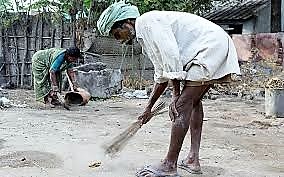
The Outcastes in India, taking up menial jobs
‘caste‘ = a social class in a society in which each community/class with a specific job or responsibility is given a specific name: for example, in India in the past, the group or community of people who ruled or governed others was ‘Kshathriya’ caste, the group of people who involved in trade and commerce was ‘Vaishya’ caste, the group which did the religious rites was ‘Brahmin’, the highest caste, the group which did the menial jobs was ‘shudra’, the lowest caste, etc., and the jobs or occupations continue generation after generation, i.e. the children of a Brahmin are Brahmins and become priests, and children of Kshathriya are Ksharhriyas and become rulers, and so on.
a person who has been sent away (rejected) by his/her own caste and is not allowed to join again;
a casteless person;
an untouchable or Dalit — a person who does not belong to any caste and so has no social status; a pariah,
e.g.

Outcastes on the streets demanding for their rights
In some cultures in South Asia, a man or a woman is made an outcaste when he or she marries a person from another caste, especially from a lower caste.
In India, a foreigner is an outcaste!
In some of the South Asian countries, the outcastes live in small groups at a respectable distance from any village or town and do very menial jobs such as cleaning toilets, removing dead animals or people, making leather shoes, etc., and are forbidden to enter temples or even to touch other people (and other people should not touch them, either) and they should not use the public water ponds, streams or wells, or are they allowed to use any public transport system!